Yes. The quiz works well for beginners because the format is visual and easy to understand. You do not need specialist geography knowledge before you start, and you can still learn from the flags you miss.
Flags of the World Quiz
Play a world flag challenge, learn how the quiz works, and keep the full keyword-focused content on this page before launching the live round.
flags of the world quizworld flags quizcountry flags quizgeography flags quizflag quiz onlineflags quiz with answers
Quick start
Start the playable version immediately, then return to this page for explanations, FAQs, and related study links after your attempt.
Fast route into the live quiz.
SEO content, FAQs, and hub links stay on this page.
Better structure for discovery and repeat visits.
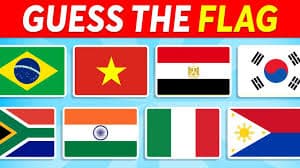
Flags of the World Quiz is a dedicated landing page for anyone searching for a fast, image-based flag challenge that doesn't sacrifice content depth. Rather than separating the quiz from its supporting material, this page keeps the explanatory copy, search-focused context, and FAQ all in one place — then gives you a direct path into the playable quiz whenever you're ready.
If you searched for a world flags quiz, a country flags quiz, or a flags of the world quiz online, you've landed in the right place. Below, you'll find everything you need to know: what the quiz covers, who it's designed for, how the questions are structured, and why flag quizzes remain one of the most replayable geography formats on the web. Want to explore more search-led quiz pages first? Head over to the Quizzes and Guides hub.
The quiz itself presents national flag images alongside multiple-choice country answers, making it quick to pick up for casual users while remaining genuinely useful for revision, classroom warm-ups, home education, trivia prep, and geography memory training. Read through the guide sections below at your own pace, then jump into the quiz in a single click when you're ready to test yourself. For related formats and topics, the Quizzes and Guides page is the best place to continue exploring.
What is the Flags of the World Quiz?
People search for a flags of the world quiz because it combines recognition, recall, pattern matching, and geography knowledge in one compact format. A single flag can trigger memory about a country's location, capital city, region, language, or historical identity — making it useful for casual players and students alike.
Many quiz visitors don't want a heavy revision page first. They want a challenge they can start immediately. At the same time, search users expect enough context to understand what they're clicking into. That's exactly why this page exists. It keeps the supporting content here, explains the quiz clearly, and offers a direct start button rather than burying the main action.
Search intent around this keyword is broad. Some people want a quick world flags test. Some want a country flags quiz with answers. Some want a geography flag quiz for children. Others want a harder challenge because they already know the common flags and want to test recognition under pressure. A well-structured landing page addresses all of those use cases without becoming vague, thin, or repetitive.
How Does This World Flags Quiz Work?
This Flags of the World Quiz is built around image-led multiple-choice questions. Each question displays a flag and asks you to identify the correct country from several answer options. It's one of the most effective quiz structures for this topic because it balances speed and fairness — you can answer quickly, but still need to separate visually similar options and avoid rushing into easy mistakes.
Flags are also naturally memorable. People often recognise colour blocks, symbols, stripes, stars, crosses, crescents, suns, or regional visual patterns before they consciously recall the country name. That makes the challenge satisfying. Even when you're unsure, your brain is comparing shapes and design patterns in the background. A good flag quiz takes full advantage of that recognition process.
In practical terms, the quiz can be used in several ways. You can play it as a cold test to see how many flags you already know. You can use it as repeated practice to improve your score over time. You can use it as a group challenge in class, at home, or during trivia nights. You can even use it as a memory game, replaying regularly and focusing on the flags that caught you out before.
Why Does the Content Stay on This Page?
A keyword page should own the search intent. It needs to contain the core explanation, headline relevance, supporting copy, and FAQ coverage in one stable location. If the main content redirects too early, the landing page becomes weaker and less useful for both users and search engines.
Keeping the content here also makes internal linking cleaner. The page sits inside the /quizzes-and-guides hub, matches the target keyword directly, and sends users into the playable quiz only when they choose to start. The keyword page satisfies discovery and intent. The quiz route satisfies interaction. Neither needs to replace the other.
For search performance, that distinction matters. Pages that only say "click here to play" are typically thin. Pages that explain what the quiz is, who it helps, how it works, and what users can expect have a much stronger chance of earning stable long-tail visibility. That is why this page includes richer supporting content instead of acting like a bare redirect.
Who Is This Country Flags Quiz Good For?
This quiz format works across multiple audiences. School-aged learners use it for geography revision and active recall practice. Teachers run it as a fast classroom starter activity. Parents use it with children who are learning country names and map awareness. Adults use it as casual trivia practice. Pub quiz players use it to sharpen flag recognition under time pressure. Because the interaction is visual and the answers are clear, the barrier to entry stays low.
It's also well suited to repeated improvement. Unlike a long article, a flag quiz gives immediate feedback — you either recognised the country or you didn't. That creates a natural loop: play, miss a few, remember those misses, replay, improve. In educational terms, that makes it strong for retrieval practice. In casual quiz terms, it makes the challenge genuinely addictive because progress is easy to track.
The format also scales in difficulty naturally. Some flags are globally famous and straightforward. Others are harder due to limited regional familiarity or visual similarity to other flags. That gives the quiz useful range — new players still get early wins, while stronger players still have to stay switched on.
What Mistakes Do People Make in a Flag Quiz?
The biggest mistake is rushing. Players often answer based on one remembered colour pattern without checking the detail that makes a flag distinct. Is there a symbol? Are the stripes vertical or horizontal? Is there a star cluster, sun, triangle, or shield? Small differences matter — especially when red, white, blue, green, or tricolour layouts appear across dozens of countries.
The second mistake is overconfident regional guessing. Some users recognise that a flag looks African, looks European, or looks Caribbean, then select too quickly from that category. Regional pattern recognition can help narrow options, but it shouldn't replace proper identification. The strongest players combine both signals: visual structure first, then regional elimination.
The third mistake is ignoring wrong answers instead of using them as study material. Every incorrect answer points to a specific gap. If you notice you're missing the same types of flags repeatedly, that's the exact area to improve. A good flag quiz isn't only a score test — it's a map of what you do and don't know yet.
How Can You Improve Your Score Over Time?
If your goal is genuine improvement rather than a one-off play, use a short repeatable method. First, take the quiz normally without overthinking. Second, note the flags you missed. Third, look again at what makes each one visually distinctive. Fourth, replay later and check whether those same flags still slow you down. This works because the quiz turns weak recognition into active recall.
It also helps to group flags mentally. Instead of treating every country as isolated, build smaller clusters — by region, by symbol type, by colour pattern, or by whether the design is simple versus emblem-heavy. Grouping improves memory because you're attaching new recognition to a structure rather than memorising hundreds of unrelated images individually.
Replay value matters here. A good online flag quiz should feel like something you can return to in order to sharpen recognition, warm up before a classroom exercise, or give yourself a quick geography challenge. That is exactly the role this page and its linked quiz are designed to serve.
Why Is a World Flags Quiz Useful for Geography Revision?
Flag recognition isn't the same as full geography knowledge, but it creates a powerful entry point. Once you can identify a flag, you're more likely to remember the country name, notice it on a map, connect it to a capital city, and retain later information more easily. That's why flag quizzes are frequently used as a gateway into broader geography study.
For younger learners, flags often create engagement before facts do. A strong visual symbol generates curiosity long before population figures or trade statistics become interesting. For older learners and adults, flags make geography revision feel lighter and more interactive than a plain text fact sheet.
That educational value also supports the SEO logic of this page. Search users looking for a world flags quiz are closer to action than users searching for a generic geography lesson. A page that meets that action-oriented intent while still offering enough supporting depth becomes far more useful than either a thin quiz page or an overly academic article.
What Makes a Strong Flags of the World Quiz Page?
A strong keyword page for this topic should do four things well. First, it should make the page purpose obvious immediately. Second, it should explain what type of quiz experience the visitor will get. Third, it should provide a direct internal route to start without confusing the user. Fourth, it should contain enough content depth to deserve the keyword rather than just borrowing it for a headline.
This page is built around that structure. The title matches the search intent directly. The body explains the challenge. The FAQ answers practical questions. The call to action launches the quiz without changing the content destination. That keeps the page stable for search and clear for human readers.
If you want to explore more quiz-style content after this, return to the Quizzes and Guides hub and browse related pages. If you're ready to test your world flag knowledge now, you can start the quiz directly from here.
FAQ
Explore revision hubs
Move from this keyword landing page into broader revision clusters and subject hubs.
Popular self-assessments
Connect high-intent visitors to guided assessment pages with dedicated content and scoring flows.